Top Cloud Technology Benefits for Mobile Application Integration in 2026 | Complete Guide
July 12, 2026
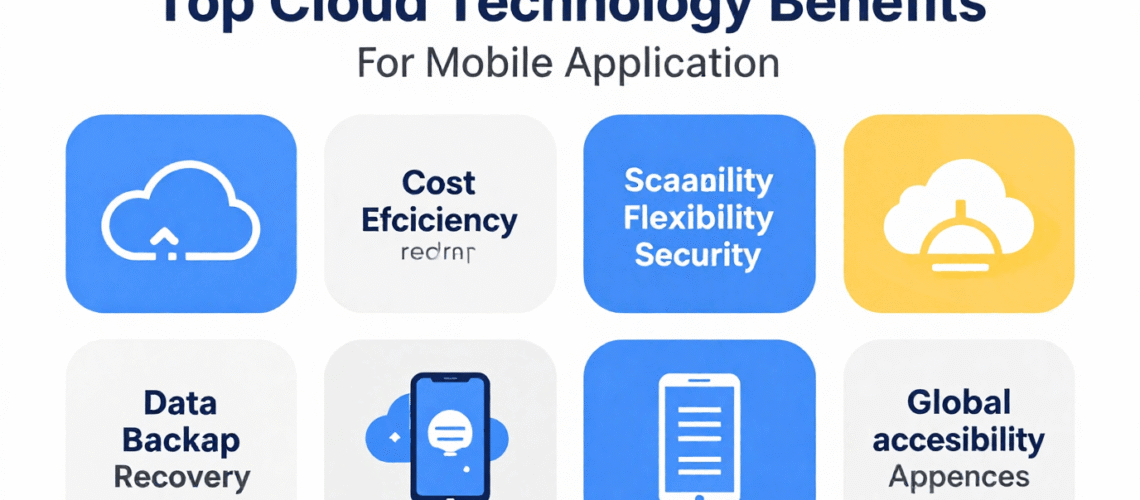
Modern mobile applications are no longer standalone apps running only on smartphones. They rely heavily on cloud technology to deliver real-time experiences, secure data storage, AI-powered features, push notifications, analytics, and seamless communication across multiple devices.
Whether you’re developing Android, iOS, Flutter, or React Native applications, integrating cloud services has become essential for building scalable and feature-rich mobile applications.
In this article, we’ll explore the major benefits of cloud technology for mobile application integration and why every modern mobile developer should understand cloud architecture.
What is Cloud Technology in Mobile Application Development?
Cloud technology refers to delivering computing resources such as servers, databases, storage, networking, machine learning, messaging, authentication, and analytics over the internet instead of relying entirely on local device resources.
A mobile application communicates with cloud services using secure APIs to exchange information, synchronize data, process files, authenticate users, and access intelligent cloud-based capabilities.
Examples include:
- User Authentication
- Cloud Database
- File Storage
- Push Notifications
- AI & Machine Learning APIs
- Payment Services
- Analytics
- Real-time Messaging
- Image Processing
- Video Streaming
Benefits of Cloud Technology for Mobile Application Integration
1. Scalability
One of the biggest advantages of cloud platforms is automatic scalability.
As your application’s user base grows, cloud infrastructure automatically handles increased traffic without requiring significant changes to your mobile application.
Benefits include:
- Auto scaling
- Load balancing
- High availability
- Better application performance during peak usage
2. Faster Development
Cloud providers offer ready-made services that eliminate the need to build everything from scratch.
Instead of creating authentication systems, notification servers, analytics platforms, or databases yourself, developers can integrate managed cloud services using SDKs and REST APIs.
This significantly reduces development time and accelerates product launches.
3. Real-Time Data Synchronization
Cloud databases enable multiple users to access updated information instantly.
Examples include:
- Chat applications
- Food delivery apps
- Ride booking apps
- Stock market apps
- Healthcare systems
- Collaboration tools
Whenever data changes, connected devices receive updates almost instantly.
4. Enhanced Security
Cloud providers invest heavily in enterprise-grade security.
Key security features include:
- End-to-end encryption
- Identity management
- Secure authentication
- Role-based access control
- API security
- Data encryption at rest
- Network firewalls
- Threat detection
- Compliance with industry standards
This helps developers build secure mobile applications with less operational overhead.
5. Cross-Platform Data Access
Cloud integration allows users to access their data seamlessly across:
- Android
- iPhone
- Tablet
- Web browser
- Desktop applications
For example, a user can upload a photo from an Android phone and immediately view it on an iPad or laptop.
6. Cloud Storage
Mobile devices have limited storage.
Cloud storage enables applications to store:
- Images
- Videos
- Documents
- Audio files
- User backups
- Application data
This reduces device storage usage while keeping data available whenever needed.
7. AI and Machine Learning Integration
Modern cloud platforms provide pre-built AI services that can be integrated into mobile applications without training custom models.
Examples include:
- Image recognition
- Speech-to-text
- Language translation
- Recommendation systems
- Chatbots
- OCR
- Text summarization
- Sentiment analysis
These services enable developers to add intelligent features quickly while reducing development complexity.
8. Push Notification Services
Cloud messaging platforms enable businesses to send notifications instantly.
Common use cases include:
- Order updates
- Promotional offers
- Banking alerts
- Appointment reminders
- OTP verification
- Delivery tracking
- News updates
Push notifications improve user engagement and retention.
9. Cost Optimization
Traditional infrastructure requires purchasing and maintaining physical servers.
Cloud computing follows a pay-as-you-go pricing model, allowing organizations to pay only for the resources they consume.
Advantages include:
- Lower infrastructure costs
- Reduced maintenance
- Automatic updates
- Flexible resource allocation
- Better return on investment
10. High Availability and Disaster Recovery
Cloud platforms replicate data across multiple regions and availability zones.
If one server or region becomes unavailable, services can continue operating with minimal interruption.
Benefits include:
- Automatic backup
- Disaster recovery
- Business continuity
- Reduced downtime
- Improved reliability
11. Simplified API Integration
Cloud services expose REST and GraphQL APIs that mobile applications can consume securely.
Common integrations include:
- Payment gateways
- Maps
- Weather services
- Social login
- SMS services
- Email services
- AI services
- Video conferencing
This modular approach simplifies development and maintenance.
12. Better Analytics and Monitoring
Cloud platforms provide insights into application performance and user behavior.
Developers can monitor:
- App crashes
- User sessions
- Device types
- Screen usage
- Performance metrics
- API latency
- Network requests
These insights help improve user experience and application stability.
Popular Cloud Platforms for Mobile Applications
Several cloud platforms are widely used for mobile application integration:
- AWS (Amazon Web Services)
- Microsoft Azure
- Google Cloud Platform (GCP)
- Firebase
- Supabase
- Cloudflare
- DigitalOcean
Each platform offers unique strengths, allowing developers to choose services based on their application’s requirements.
Typical Cloud Architecture for a Mobile App
A modern mobile application often follows this architecture:
Mobile App (Android/iOS/Flutter)
⬇️ Secure HTTPS API Requests
API Gateway / Backend Services
⬇️
Authentication Service
⬇️
Cloud Database
⬇️
Object Storage
⬇️
AI Services
⬇️
Analytics & Monitoring
⬇️
Push Notification Service
This architecture enables scalability, security, maintainability, and rapid feature development.
Final Thoughts
Cloud technology has transformed mobile application development by enabling scalable, secure, and intelligent applications that can serve users worldwide. From authentication and databases to AI services and real-time communication, cloud platforms provide the building blocks needed to create modern mobile experiences.
Whether you’re an Android developer, iOS developer, Flutter engineer, or mobile architect, learning cloud integration is becoming just as important as mastering mobile frameworks. As AI, edge computing, and serverless architectures continue to evolve, cloud-powered mobile applications will play an even greater role in the future of software development.
Investing time in cloud technologies today will help you build faster, more reliable, and future-ready mobile applications.